
Dynamic vs Condenser Mic for a Podcast or Class Studio: Which Should You Choose?
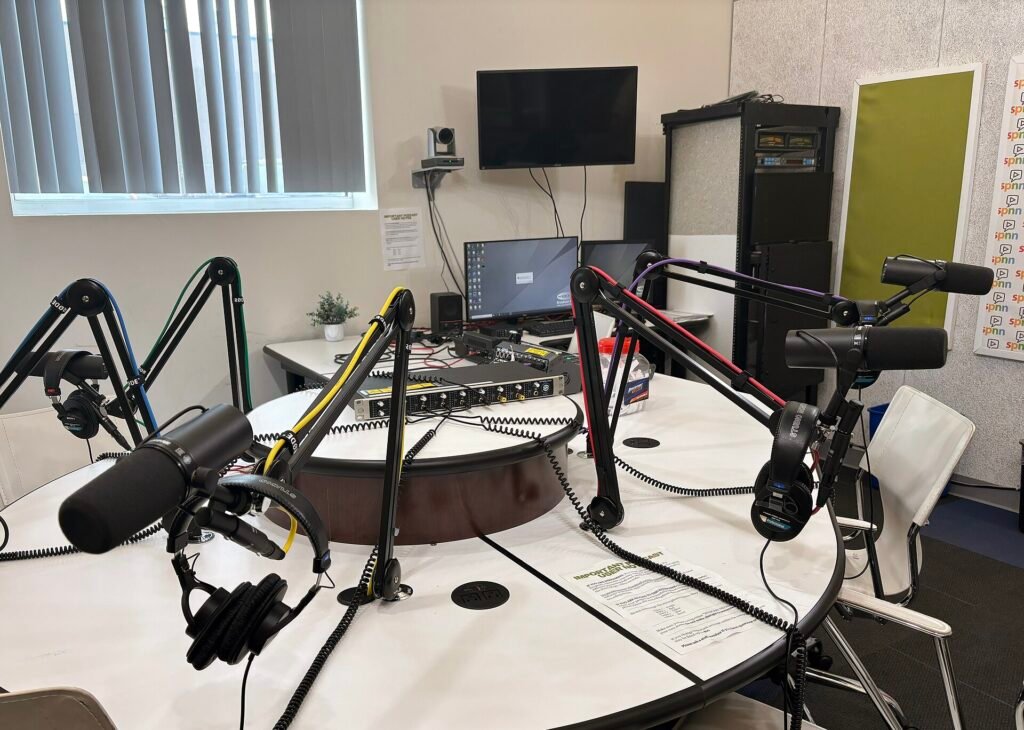
Photo: Myotus, CC BY 4.0, via Wikimedia Commons
The microphone is where most studios go wrong
People forgive a slightly soft picture. They do not forgive bad sound. If a listener has to strain to hear you over a ceiling fan, or the voice sounds like it was recorded in a bathroom, they leave, often within the first minute. That is a painful thing to discover after weeks of planning a show or a course.
So before cameras, lights or a backdrop, the first real decision in any podcast or online class studio is the microphone. And the first fork in that road is simple to name: dynamic or condenser?
What is the difference, in plain words?
Both turn your voice into an electrical signal, but they do it differently. Shure, one of the oldest microphone makers, explains it this way in its Mic Basics guide (page dated 6 August 2026):
- Dynamic microphones are rugged. Shure says they tolerate rough handling, extreme temperature, humidity and moisture, and can handle extremely high sound levels without distorting.
- Condenser microphones are typically more sensitive than dynamic ones, and they need a power source to work, either a battery inside the mic or phantom power sent down the cable from the mixer or recorder.
Shure’s tech tip on phantom power (5 February 2007) puts phantom power in the 11 to 48 volt range, and says a balanced dynamic microphone is not affected by it. In practice that means you can leave phantom power on for a mixed set of mics with ordinary balanced XLR cables, but check the manual for anything unusual.
Why sensitivity cuts both ways in a real room
A more sensitive microphone hears more detail in your voice. It also hears more of everything else. In a typical Indian room that might mean the ceiling fan, a pressure cooker in the next flat, horns from the road, or the echo off bare walls and a tiled floor.
This is our own experience from setting up rooms, not a manufacturer claim: in an untreated or noisy room, a dynamic microphone placed close to the mouth usually gives a cleaner, more usable recording, because the voice is much louder than the room at that distance. A condenser in the same room tends to capture the room along with the voice.
When to choose a dynamic microphone
- Two or more people at one table. Each person speaks close to their own mic, and you get less of the other voices bleeding in.
- Rooms you cannot fully treat, such as an office cabin, a coaching classroom or a home with traffic outside.
- Daily use by many people. Shure describes dynamics as tough, which matters when the studio is shared.
- Simple setups. No phantom power is needed, although some dynamic mics have a low output and need an interface with plenty of clean gain.
That is why most podcast tables, including the one in the photo above, use dynamic microphones on boom arms. It is also what we usually plan in a podcast studio setup.
When a condenser microphone makes sense
- A quiet, treated room with one speaker, such as a voice-over booth or a well-treated recording studio.
- Music and instruments. Shure lists acoustic guitar, stringed instruments and cymbals among the uses where condensers shine.
- Small clip-on (lavalier) and headset mics. Shure notes these very small mics are often condensers. They are popular with teachers who move around the board while teaching.
If you want a condenser for its detail, plan the room first. Our studio acoustic treatment page explains how panels and bass traps cut echo.
What about online classes?
For a teacher seated at a desk, a dynamic mic on a boom arm just out of the camera frame works well. For a teacher who stands and writes on a digital board, a wireless lavalier is often easier, because the distance to the mouth stays the same as they move. Our online teaching studio setup page covers the full kit: camera, lights, board and sound.
What we could not confirm
Shure’s guides compare the two designs in general terms. They do not say one type is better for podcasts, so our recommendations above are our own judgement from real rooms. Individual models vary a lot within each type, in sensitivity, pickup pattern and output level, so check the spec sheet of the exact mic you are considering. We have not named prices, as they change often.
Final thoughts
If your room is ordinary, busy or shared, start with a dynamic microphone close to each speaker’s mouth. If your room is quiet and treated and you want every detail, a condenser can reward you. Either way, the room matters as much as the microphone. If you are planning a podcast or class studio and want a second opinion, tell us about your room and we will suggest a setup.
Frequently Asked Questions (FAQs)
Is a dynamic or condenser mic better for a podcast?
For most podcast rooms, especially untreated ones or tables with two or more speakers, a dynamic mic placed close to the mouth gives cleaner sound because it captures less of the room. A condenser suits a quiet, treated room with a single speaker.
Does a dynamic microphone need phantom power?
No. Dynamic microphones work without a power source. Shure says a balanced dynamic mic is not affected by phantom power, so leaving it on is normally safe with standard balanced cables.
Why does my condenser mic pick up so much background noise?
Condenser mics are typically more sensitive than dynamic ones, so they pick up more of the room, including fans, traffic and echo. Moving closer, treating the room or switching to a dynamic mic usually helps.
What voltage is phantom power?
Shure describes phantom power as a DC voltage in the 11 to 48 volt range, supplied through the microphone cable from a mixer, interface or recorder.
Which microphone is best for a teacher recording online classes?
A dynamic mic on a boom arm suits a seated teacher. A wireless lavalier suits a teacher who stands and moves around a digital board, because the distance to the mouth stays constant.